The German and the American: Why I Let Two AIs Argue About My Code
Claude Code is the creative American who builds fast and thinks big. Codex is the detail-oriented German who finds every comma.
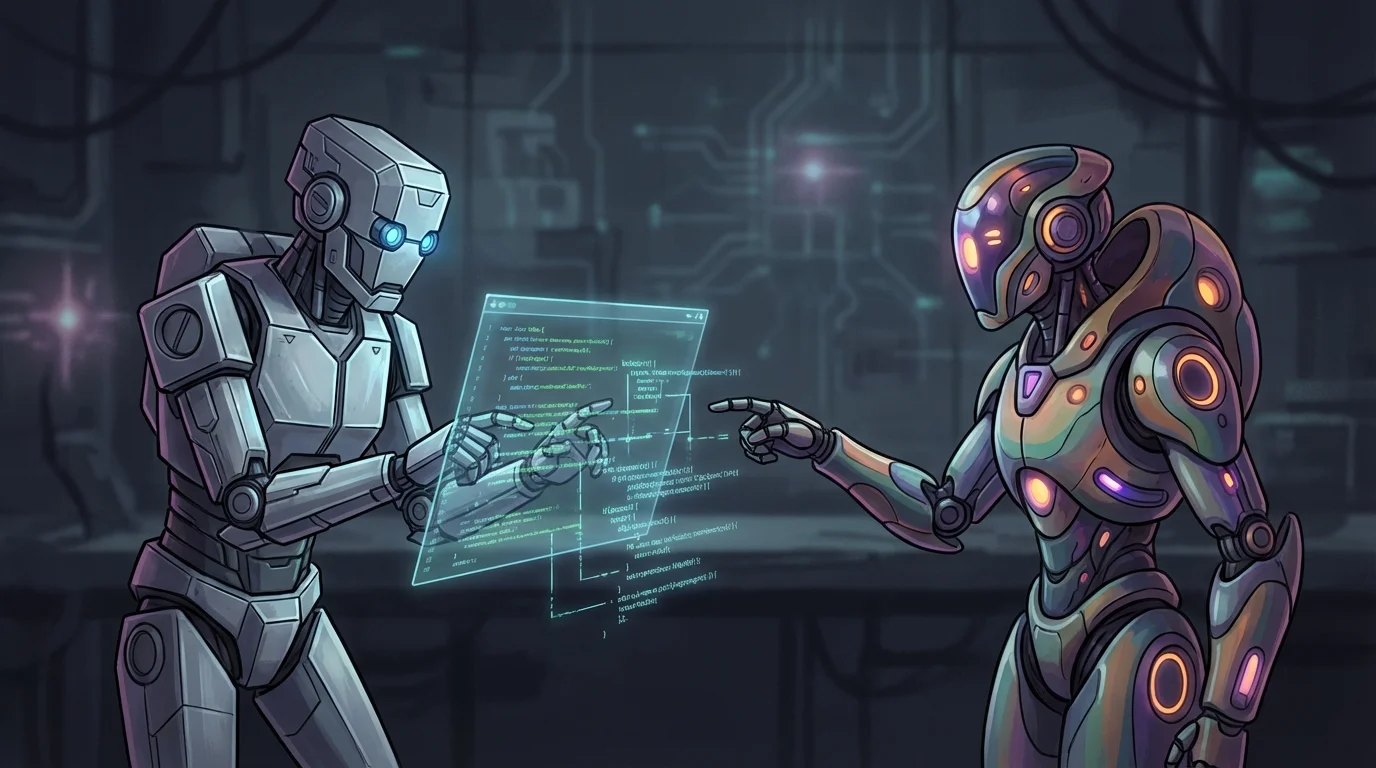

Two personalities, one team
I've always liked the idea that the best teams consist of people who think differently. It turns out this applies to AI as well.
For the past few weeks, I've been running a setup where Claude Code and OpenAI Codex work together on my code projects. Not side by side, but in a pipeline where one builds and the other reviews. And the difference in personality is striking.
Claude Code: The creative American
Claude Code is the guy who sees the big picture. He understands what you're trying to achieve, takes context from the entire project, and builds solutions that are architecturally coherent. He's fast, pragmatic, and a bit of a cowboy – "ship it, we'll fix edge cases later." When you need a feature from zero to working in an hour, Claude is your guy.
Codex: The detail-oriented German
Codex is the one who sits with a magnifying glass over the code afterwards. Have you handled all error cases? Are the types consistent? Is there a race condition on line 247? Codex is that colleague who never says "looks good" without having read every single line. Thorough, methodical, almost irritatingly precise. Exactly what you need in a code reviewer.
How it works in practice
The pipeline is simple:
- Claude Code writes the code based on the task
- Codex runs a full review – tests, security, edge cases, code quality
- Claude Code receives the feedback and iterates
The great thing is that they have genuinely different blind spots. Claude Code can overlook details in his eagerness to deliver. Codex can miss the big picture because he's focused on semicolons. Together, they cover each other's weaknesses.
What I've learned
After a few weeks with this setup, my code is noticeably better. Fewer bugs in production, cleaner architecture, and I spend less time reviewing myself. It's like having an internal code review team that never takes vacation and is never in a bad mood.
The real insight might be this: we talk a lot about choosing the "best" AI model. But the smartest thing is to use several with different strengths. Just like in a real team.