Google Quietly Tests AI-Rewritten Headlines in Search Results — Without Asking Publishers
Google is running an experiment that could fundamentally alter the web as we know it: The search giant is replacing news headlines written by editors with its own AI-generated versions — directly inside search
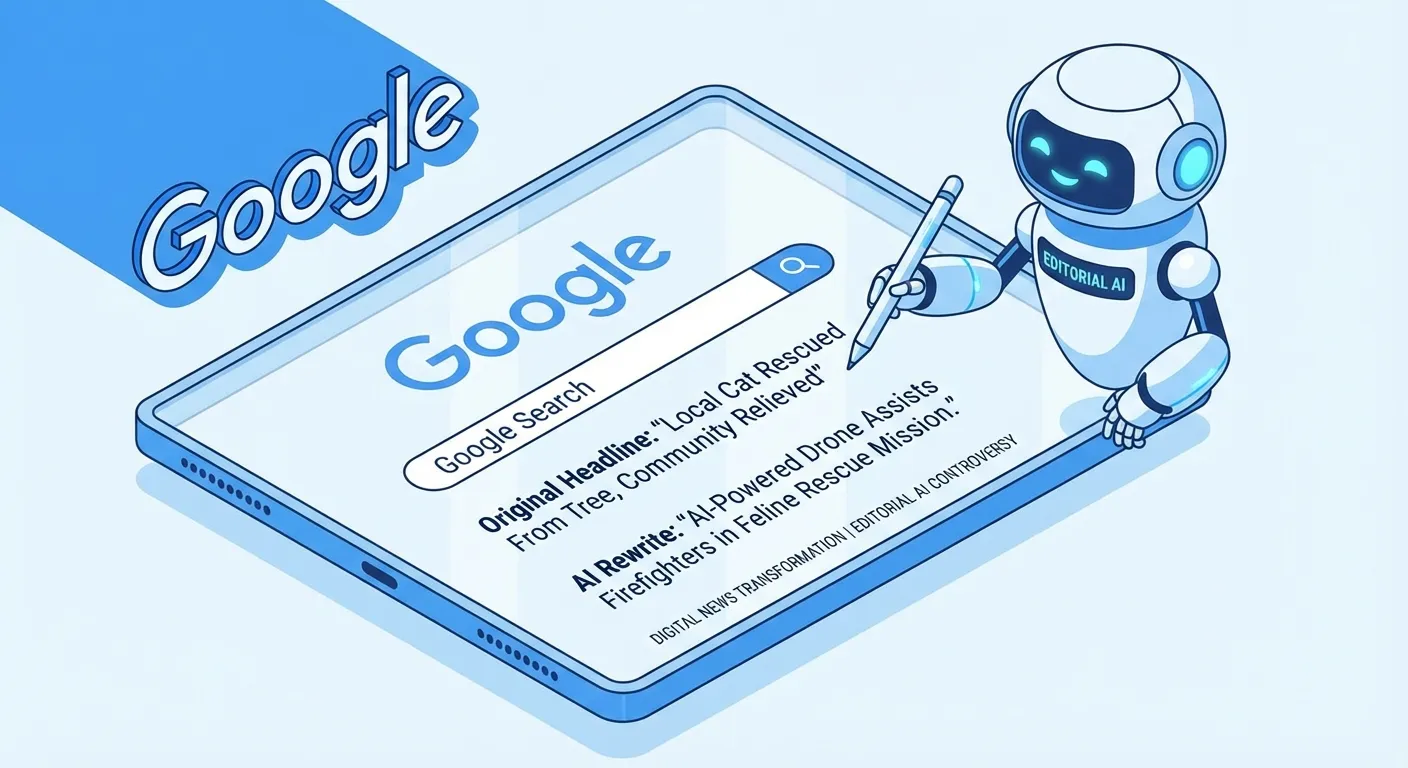

Google is running an experiment that could fundamentally alter the web as we know it: The search giant is replacing news headlines written by editors with its own AI-generated versions — directly inside search results.
The Verge revealed today that Google has already begun swapping out original headlines in its traditional "10 blue links." Editors discovered that Google had shortened and reworded their own articles — in some cases changing the intended meaning.
What's Happening in Practice?
The Verge found that one of its own headlines — "I used the 'cheat on everything' AI tool and it didn't help me cheat on anything" — was cut down to just five words by Google: "'Cheat on everything' AI tool." According to the publication, it almost sounds like an endorsement of a product they explicitly do not recommend.
Google confirmed to The Verge that this is a "small" and "narrow" experiment that has not yet been approved for a broader rollout. The company declined to say how many users are exposed, or what criteria determine which headlines get rewritten.
Not the First Time
Google has already done something similar in its Google Discover feed — its personalized news stream. That was presented as a "feature, not an experiment," triggering sharp criticism from the media industry.
Consequences for Publishers
For newsrooms that depend on Google Search traffic, this is serious:
- Misleading framing: If Google changes tone or meaning, readers may get the wrong impression before they even click.
- Loss of editorial control: Editors lose ownership of the first impression of their own content.
- SEO uncertainty: If AI titles appear instead of originals, click-through rates and traffic may be impacted.
- Legal questions: Modifying published headlines without consent may challenge copyright law.
A Shift With Major Implications
The web since the early 2000s has been built on an unspoken contract: the link takes you to the page, and the headline tells you what's there. Google is now breaking that contract — with AI as the intermediary.
For CIOs and digital leaders, this means that visibility in Google Search is no longer fully controllable. Brand positioning, news coverage, and reputation management can all be affected by how an algorithm chooses to reframe your content.
This is one of the most controversial AI tests Google has run on its core product — and it's live right now.