Google ran AI on its own TPU chips in orbit – the first answer came down over Svalbard
The prototype satellite in Google's Project Suncatcher has delivered its first AI answer from space: a haiku from Gemma 4, downlinked over Svalbard. Next up are heat and radiation tests.
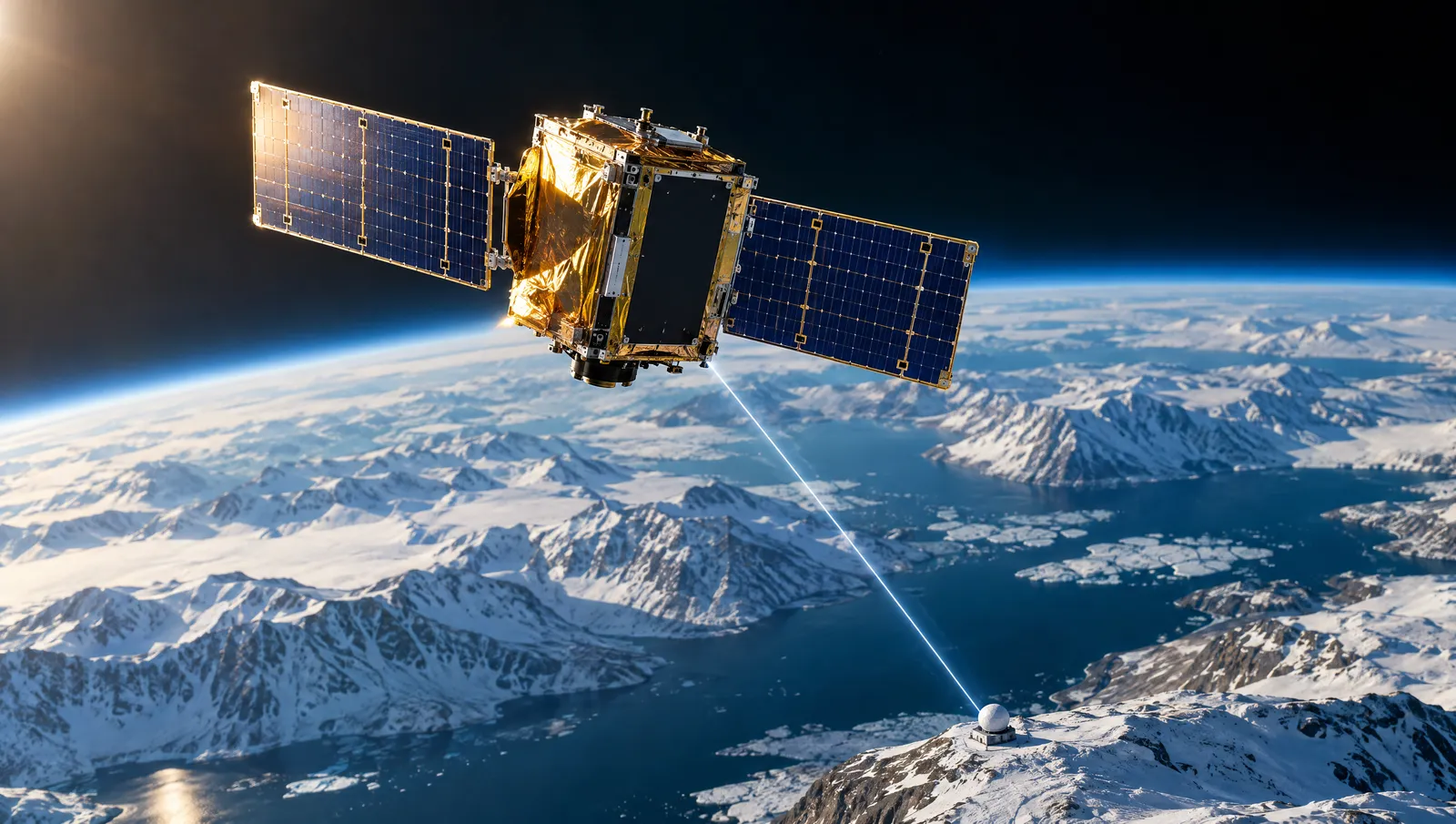

Google has received the first answer from an AI model running on its own data center chips in space. The answer, a short poem, came down while the Project Suncatcher prototype satellite was passing over Svalbard, Norway. Google calls it the project's "Hello World" milestone.
The company announced the milestone in a blog post on Friday 30 October 2026 at 17:00 UTC and followed up on X the same evening. It is an early research experiment, not a service customers can buy. But it shows how far the largest AI companies are willing to go to find power and capacity for the compute they need.
Four TPUs sent up in October
The prototype satellite launched on 1 October on SpaceX's Transporter-18 rideshare mission. It was built in partnership with satellite company Planet. According to Google's post on X, the company sent four TPUs into orbit. TPUs (Tensor Processing Units) are the chips Google designs for AI work and otherwise runs in its data centers.
The first weeks went to commissioning. Google writes that the team powered up the host and TPU trays and ran early machine learning tests. This week came the first AI response from what Google describes as a data center class TPU in orbit. That it is the first of its kind is Google's own claim.
Gemma 4 wrote a haiku about being in space
During a ground-station pass, the team uplinked a prompt to the open Gemma 4 model running on board, asking it to write a haiku about being in space. As the satellite passed Svalbard, the poem came down and confirmed that the test worked:
"Blue marble below / Data streams in silent grace / Starlight feeds my core."
The team then tested space-themed limericks and prompts that report the technical status of the payload. Google does not say which ground station was used, or how long it took from uplinking the prompt to receiving the answer.
Next test: heat and radiation
Google writes that the next tests will show how the TPUs cope with thermal stress and radiation in orbit. If the chips can run workloads reliably in space, that paves the way for the next milestone: two interconnected satellites, planned for 2027.
In a September post, Google explains why it is looking to space. In low Earth orbit, satellites get near-constant sunlight and, according to Google, can generate up to eight times more solar power than on Earth. Over time, Google envisions clusters of satellites each carrying dozens of TPUs and talking to each other by laser.
The challenges are large, and Google says so itself. During launch, individual components can face forces of 50 to 100 g. In a vacuum there is no air to cool the chips, so heat has to be carried away with heat pipes and radiators. Google tested Trillium TPUs in a proton beam at UC Davis and says they survived a total radiation dose greater than they would receive during a five-year space mission.
What it means for leaders
- AI capacity is an energy question. Google researching data centers in orbit reflects how power and cooling limit how fast AI can be built out on Earth. That affects the price and availability of compute for customers everywhere.
- This is research, not a purchase. Google calls Suncatcher a long-term moonshot. It gives no costs, commercial plans or service timeline, and the next step is a two-satellite test in 2027.
- The Arctic is part of the picture. The answer came down over Svalbard. That says nothing about Norwegian participation in the project, but it is a reminder that the Arctic is already part of the infrastructure around satellites and data.
Google has published a peer-reviewed paper on the research behind the mission in the journal Joule.
Sources and media
- Google: We’ve received our first response from the Project Suncatcher prototype satellite, 30 October 2026, 17:00 UTC
- Google on X: "Our TPUs just phoned home... from space", 30 October 2026, 19:04 UTC
- Google: Our Project Suncatcher prototype satellite is in orbit, 1 October 2026
- Google: Behind Project Suncatcher, our moonshot to put AI in space, 24 September 2026
Illustration: AI-generated with Grok Bot / hogby.ai