Microsoft embeds Copilot directly into Power Apps — AI is no longer an add-on
Microsoft took a significant step on March 27, 2026: Copilot is now built directly into model-driven Power Apps, and it is no longer a side panel. It is the application
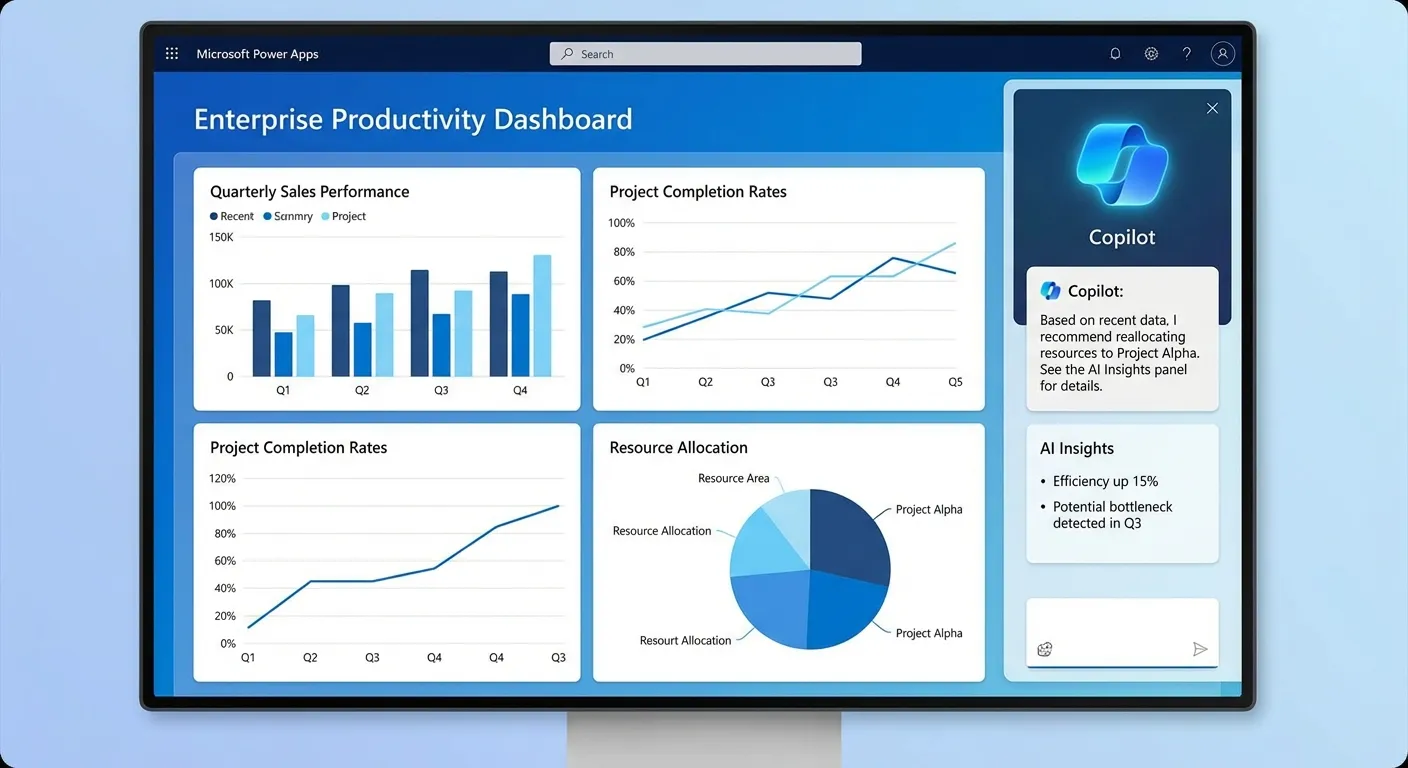

Microsoft took a significant step on March 27, 2026: Copilot is now built directly into model-driven Power Apps, and it is no longer a side panel. It is the application itself.
According to Microsoft's official Power Platform update, users can now query their application data in natural language, generate visualizations, summarize records, and execute actions such as creating documents and scheduling meetings — all without leaving the application they are already working in.
This is part of Microsoft's 2026 Release Wave 1 and represents a strategic shift: from AI as an add-on product to AI as native infrastructure within business applications. The Copilot pane now provides access to first-party agents like Researcher and Analyst, as well as custom agents built in Copilot Studio.
Another development is Object-Centric Process Mining (OCPM) in Power Automate, enabling organizations to analyze complex business processes across objects such as orders, invoices, and payments. This is highly relevant for enterprises seeking data-driven process optimization.
Practical implications
For CIOs evaluating Power Platform investments, this means the barrier to AI adoption is dramatically lower: users do not need to learn a new AI application. They use AI where they already work.
The downside is that features are rolling out gradually through 2026, and from April 15, large enterprises (over 2,000 users) will require a paid Microsoft 365 Copilot license for full Copilot access in Word, Excel, and PowerPoint. Reduced capacity during peak times is expected for users without a license.
The integration is already available in public preview in Power Apps.