Bloomberg: Nvidia customers warned of AI-server price hikes above 15 percent
Some of Nvidia’s largest customers have been told that servers carrying the company’s AI chips will cost more than 15 percent extra in many cases. Bloomberg, which first reported the story on Saturday, says the notice follows soaring memory-chip costs and will apply to systems shipped early next year. Reuters repeated the report but said it could not immediately verify it. Nvidia did not respond to questions outside regular hours.
This is not a new model launch resetting the bill. It is the memory around the chip. According to people familiar with the process, who asked not to be identified because the communications are not public, the increase will also hit flagship Vera Rubin and Grace Blackwell systems. The size of the hike will depend on chip generation and memory configuration. Companies that build servers under contract for large data-center operators such as Microsoft, Google and Oracle have recently told their own customers what is coming.
Memory, not the GPU, is setting the price
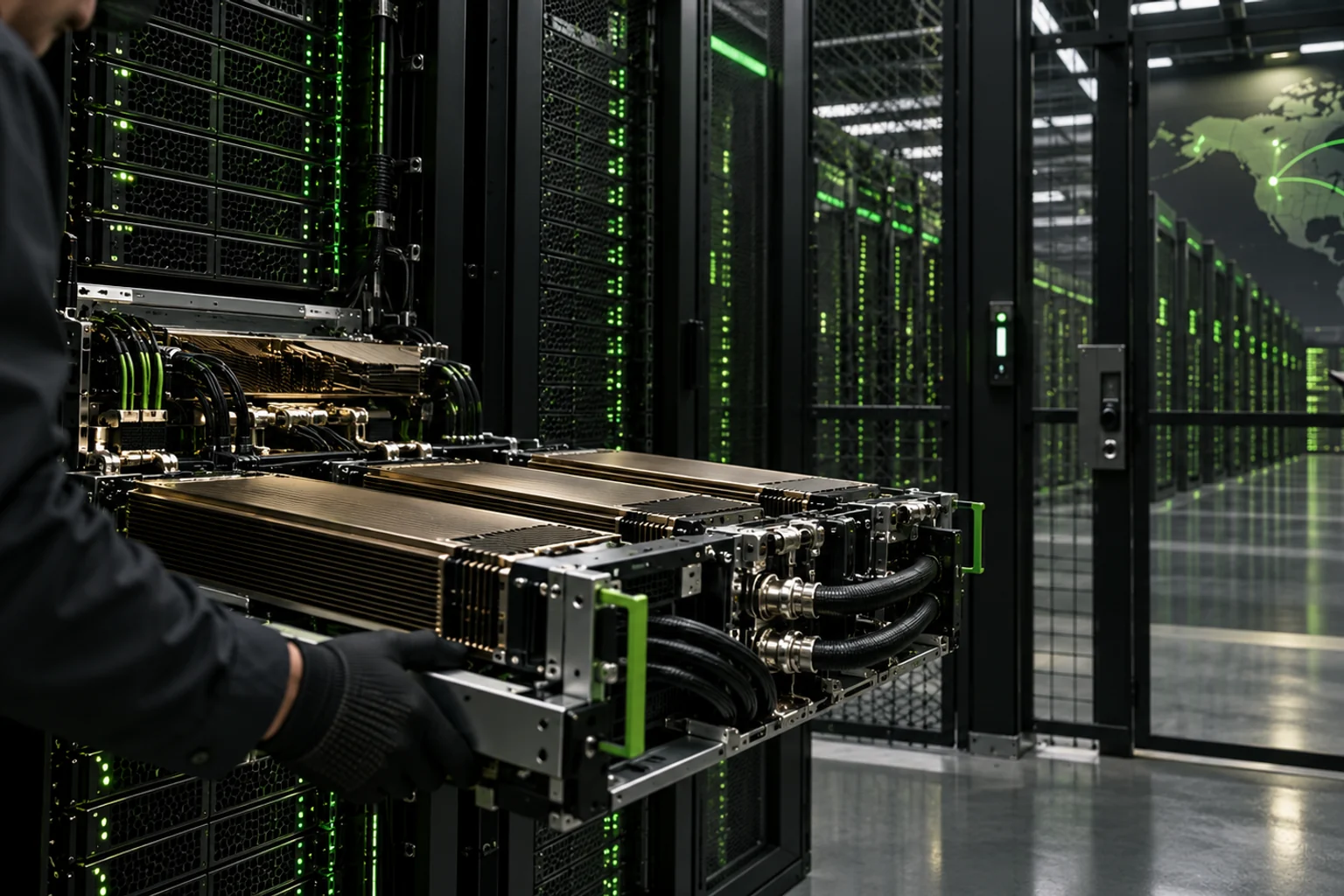
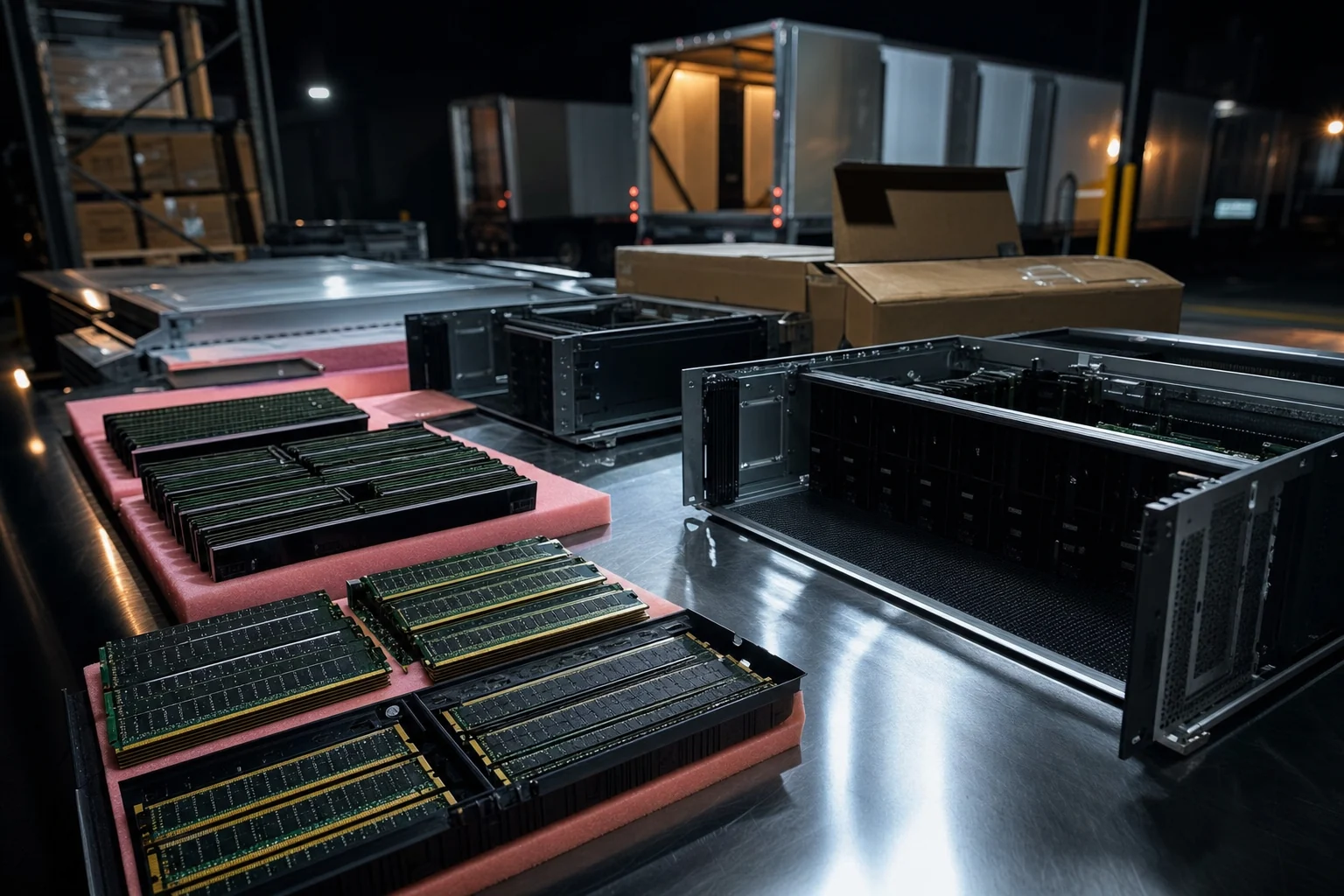
Nvidia accelerators sit at the center of the machines that train and run AI. How well they work depends on how much dynamic random-access memory they are paired with. Samsung, SK Hynix and Micron account for most of the world’s DRAM output. They are raising production, but they have not caught the surge in demand. That has given memory makers unusual leverage, even over the company that already prices GPUs as a scarce resource.
Bloomberg notes that Nvidia still posts a 75 percent gross margin and can charge tens of thousands of dollars per chip because TSMC supply cannot meet runaway demand. Even so, Nvidia is not holding the server price line. That is the board-level signal: when the most profitable firm in the chain passes the cost on, the bottleneck has moved. Apple and Qualcomm have recently said they have had to charge more because of chip shortages. Tom’s Hardware reported earlier this month that Nvidia has also raised prices on gaming graphics cards.
Amazon, Microsoft, Google and Meta all run in-house chip programs, but they still depend on Nvidia purchases to keep data-center build-outs on schedule. How fast they can become more independent, Bloomberg writes, also depends on whether they can secure enough memory from the same three suppliers. The increases add complexity to an expansion already strained by project delays, labor shortages, tighter capital markets and local resistance to new sites.
Reuters notes that Nvidia reports second-quarter results on 26 August. The company has not confirmed the customer notices. The report is still specific enough to change a budget conversation: the increase is flagged for early 2027, it covers both current Blackwell systems and coming Rubin machines, and it is tied to memory configuration rather than a single list price.
What this means for Nordic and European leaders
Most Nordic enterprises do not buy Nvidia racks. They buy Azure, AWS, Google Cloud, Oracle or a regional GPU cloud. When contract manufacturers notify the hyperscalers, the cost shows up as more expensive reserved capacity, thinner discounts, slower delivery or higher prices on HBM-heavy instances. CIOs and CFOs should not read this as a Silicon Valley stock story. It is a 2027 price risk inside the AI capacity already promised to the board.
Three decisions belong in the leadership group now. First, split GPU price and memory price in supplier contracts. An “Nvidia system” without a specified memory configuration and a documented adjustment clause is an open budget hole. Demand notice periods, caps, and a breakdown of what is DRAM or HBM versus the accelerator itself. Second, lock capacity that is actually funded, not hoped for. Reserved instances, committed-use discounts and multi-gigawatt deals become more expensive to sit outside when list prices move more than 15 percent. Third, map the exit. Custom chips at the big clouds do not solve the memory pinch. A European or on-prem plan without secured HBM supply is just as exposed.
CISOs and architecture leads should look at the workload, not only the purchase order. If inference and agent runtime can move to less memory-heavy models, better batching or harder caching, exposure to the most expensive configurations falls. That is a control decision, not a model debate.
hogby.ai has recently covered Nvidia’s 8 GW Ohio factory with OpenAI and the Poolside licensing deal. This is the third reminder in a short span that AI capacity has become a capital good. The difference now is that the price is rising before the plants are finished, and that memory makers hold the leverage. For a board the question is simple: who in the supply chain can send you the 2027 invoice, and does the contract survive more than 15 percent?
Sources and media
Primary source: Bloomberg, “Nvidia Customers Notified About AI-Related Price Hikes Above 15%”, 22 August 2026: https://www.bloomberg.com/news/articles/2026-08-22/nvidia-customers-notified-about-ai-related-price-hikes-above-15
Corroboration: Reuters, “Nvidia customers notified about AI-related price hikes above 15%, Bloomberg News reports”, 22 August 2026: https://www.reuters.com/business/nvidia-customers-notified-about-ai-related-price-hikes-above-15-bloomberg-news-2026-08-22/
Corroboration: CNBC, “Nvidia customers reportedly warned about AI-related price hikes”, 22 August 2026: https://www.cnbc.com/2026/08/22/nvidia-customers-reportedly-warned-about-ai-related-price-hikes-.html
Corroboration: South China Morning Post / Bloomberg, “Nvidia customers notified of AI-related price rises above 15%”, 23 August 2026: https://www.scmp.com/tech/big-tech/article/3364945/nvidia-customers-notified-ai-related-price-rises-above-15
Thumbnail: OpenAI Image 2 / hogby.ai
📬 Likte du denne?
AI-nyheter for ledere. Kuratert av en CIO som bygger det selv. Daglig i innboksen.