OpenAI sets course for a fully automated researcher: AI intern by September, autonomous research system by 2028
OpenAI has announced its new grand challenge: a fully automated AI researcher. Chief scientist Jakub Pachocki confirmed in an exclusive interview with MIT Technology Review that this is the company's North Star for the coming
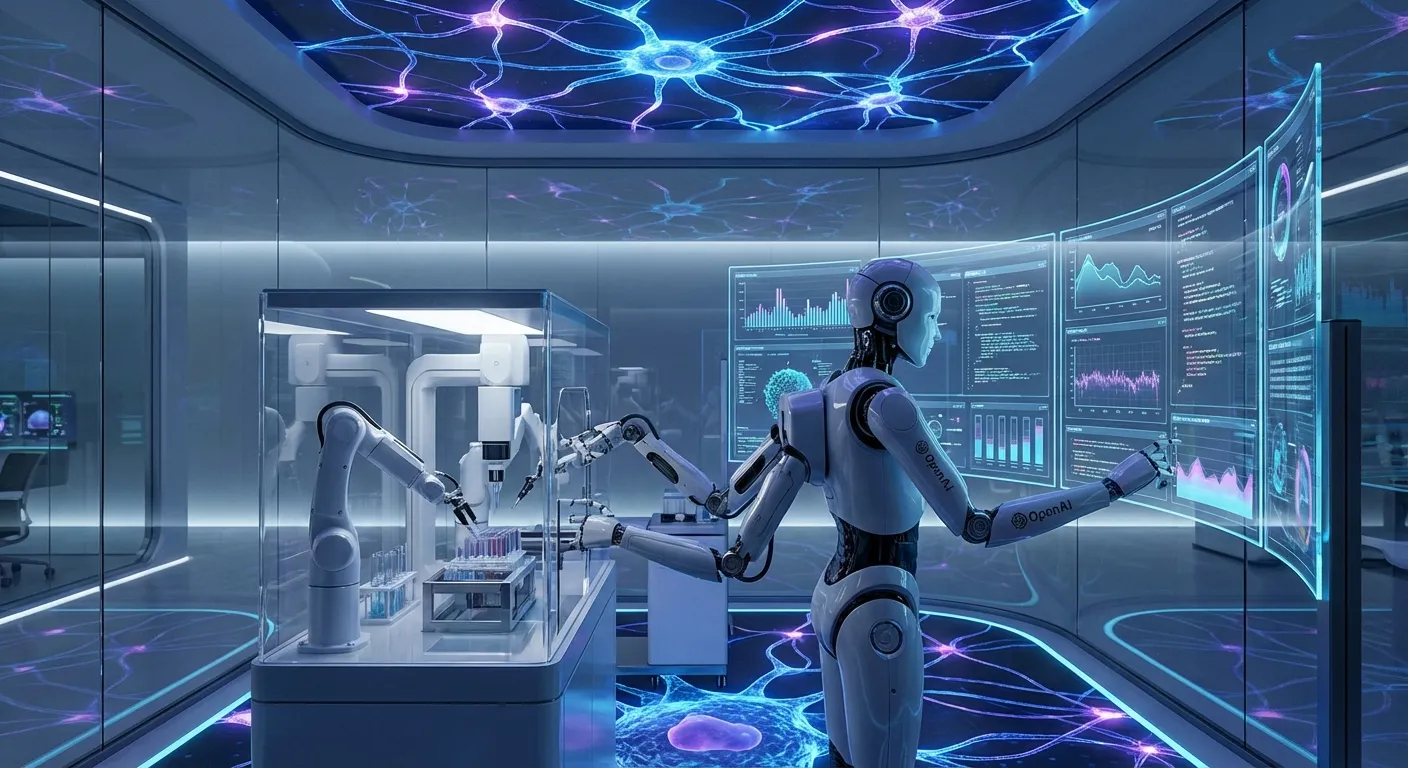

OpenAI has announced its new grand challenge: a fully automated AI researcher. Chief scientist Jakub Pachocki confirmed in an exclusive interview with MIT Technology Review that this is the company's North Star for the coming years.
The plan is concrete. By September 2026, OpenAI aims to have a system functioning as an AI research intern, capable of independently tackling a limited number of specific research problems. By 2028, the ambition is a fully automated multi-agent research system that can handle problems too large or complex for humans alone.
The use cases span wide: mathematics and physics, biology and chemistry, as well as business and policy challenges. The system is designed to accept any problem that can be expressed in text, code, or whiteboard notation.
This initiative brings together OpenAI's ongoing work in reasoning models, agents, and interpretability under a single overarching goal. It is as much a strategic reorganization as a technical ambition.
For business leaders and CIOs, this is worth monitoring carefully. If such a system delivers, it changes what human expertise is actually used for. Organizations already automating repetitive tasks should begin thinking about the next layer: what happens when AI systems start performing the knowledge production itself?
OpenAI faces fierce competition from Anthropic and Google DeepMind, but continues to set the agenda for what the industry sees as possible.