Tufts Breakthrough: Brain-Inspired AI Could Be 100x More Energy Efficient
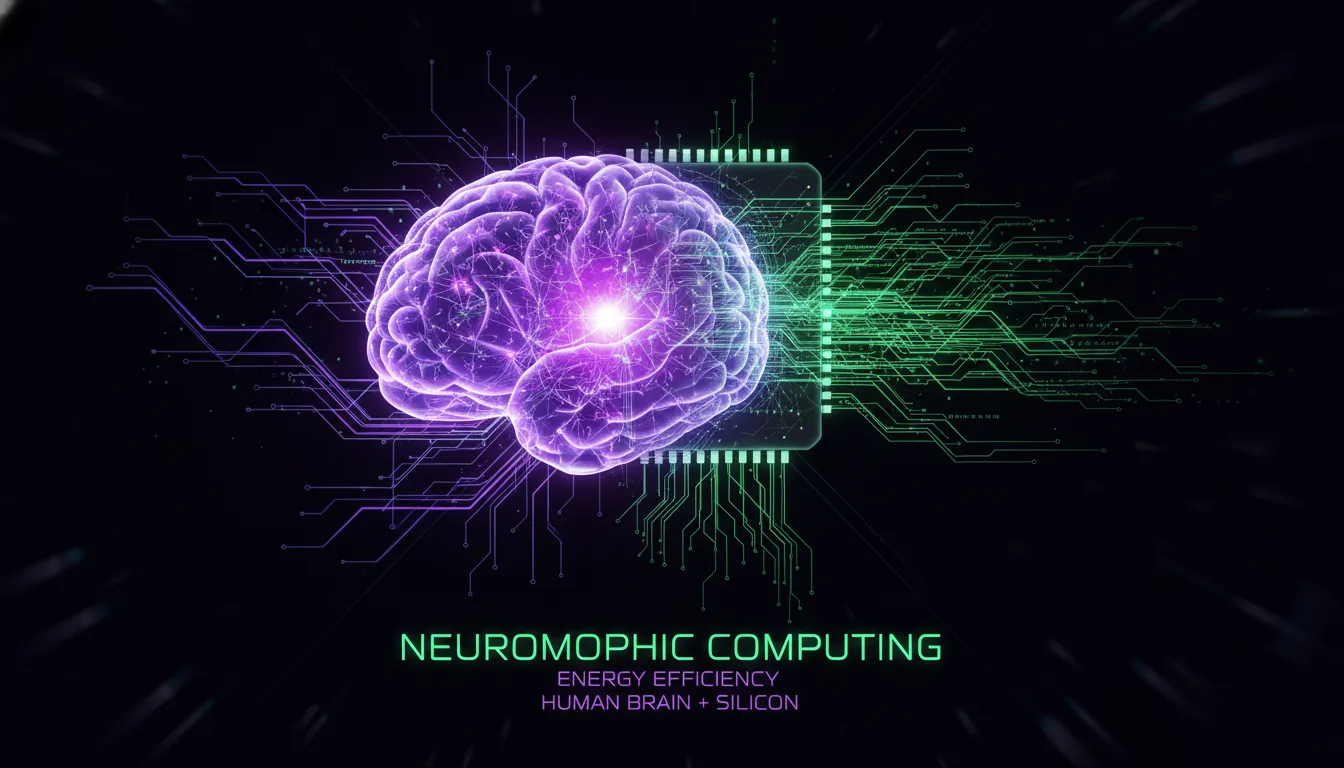

Researchers at Tufts University have unveiled a new approach to artificial intelligence that combines neural networks with human-like symbolic reasoning. The breakthrough, announced on April 6, 2026, could reduce AI energy consumption by up to 100 times while simultaneously improving accuracy.
The method is based on neuromorphic computing, an architecture that mimics how the biological brain processes information. Instead of running everything through massive matrix multiplications in parallel, the system uses sparse, event-driven computation — much like neurons in the brain firing only when needed.
The research team demonstrated that the system could solve complex physics equations faster and at far lower energy cost than traditional GPU-based models, outperforming systems that required supercomputer-grade hardware in some tests.
For organizations running AI in production, this is directly relevant. Energy costs for large AI models are an increasingly significant budget pressure. An architecture that delivers better performance at a fraction of the energy cost could reshape the economics of AI deployment in data centers, edge environments, and on-device applications.
The Tufts results are not yet in commercial production, but could have a major impact on next-generation AI hardware over the coming two to three years.