Anthropic opens MHS: AI agents are to operate robots and lab gear
Anthropic opens MHS: AI agents are meant to drive robot arms, lasers and lab gear through a shared driver. Preview now, open source later. For CIOs and CISOs this is OT: safety limits, kill-switch and who owns authority.
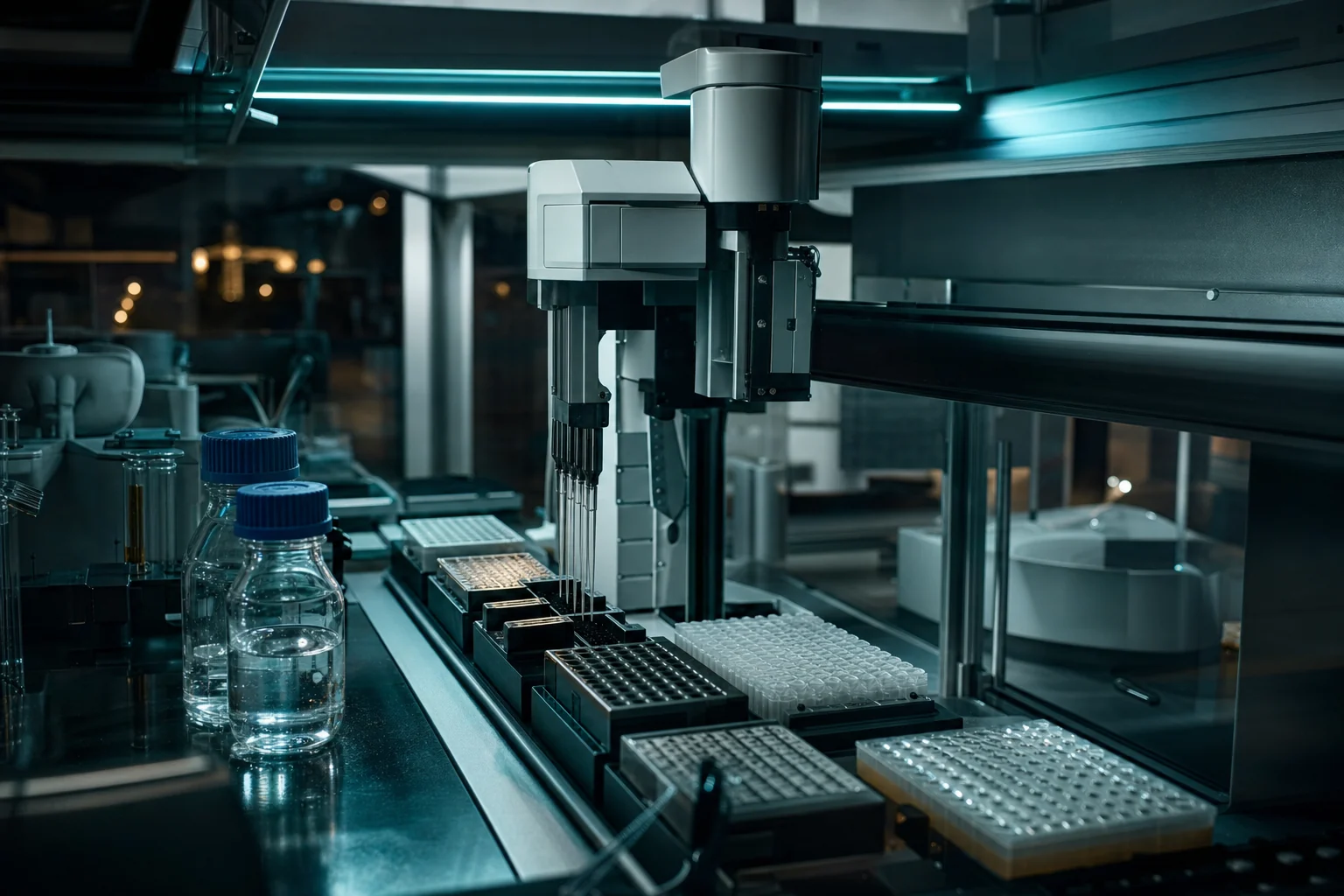

Anthropic is opening a research preview of the Model Hardware Standard, MHS: a shared specification for AI agents to operate physical instruments without a custom integration for every lab or factory stack. The announcement landed 27 August 2026. The first circle is scientific research labs and advanced manufacturers. Agents are meant to run microscopes, liquid handlers and robotic arms in parallel, from routine drug-discovery assays to laser calibration on a quantum computer.
The work began as a collaboration between Anthropic and HHMI Janelia Research Campus. Anthropic says it typically takes weeks or months to make lab and production hardware talk to each other. MHS is supposed to cut that to hours or minutes. Agents should orchestrate round-the-clock experiments, update parameters in real time and, in some cases, recover from hardware faults without a human stepping in.
The standard is model-agnostic and works with any device that has a programmable interface. Agent harnesses can reach it through ordinary protocols, including the Model Context Protocol. Anthropic plans to open-source MHS later. Before that, partners in science, robotics, electronics and manufacturing are supposed to build safety evaluations and operating practice for AI that touches physical equipment.
The driver is the control plane
The problem MHS attacks is familiar in Norwegian process and lab environments: every instrument has its own interface. Once devices are connected, there is still no common way to share data with an AI agent, and no common way to let the agent operate them safely.
MHS introduces a standardised driver between the operating system and the machine. Simple primitives such as “read” and “write” — get temperature, set temperature — are meant to work across hardware. Devices become discoverable in a shared format, so agents and machines can find each other without a bespoke translator for every pairing.
The driver is also supposed to tell an agent how to use equipment it has never seen. The mass of a robot arm, which determines what is safe to lift, today lives in paper manuals, local files or a technician’s head. In MHS those properties can be written as natural-language tags, by the user or by an agent that interviews them about the setup. The driver then produces a reference file: what the machine can measure, what can be adjusted, and which safety limits will be enforced.
Once devices are connected and documented, they are controlled through three channels: MCP, the command line, and code files (APIs). They can be orchestrated with a single line of code. The agent monitors, sequences steps and adjusts parameters as conditions change. For long-running or high-speed operations it can chain driver commands into code files so the machines run deterministically without the model reasoning at every step.
Anthropic says Claude behaved exploratively in tests, like a scientist. In one example Claude adjusted a laser, watched the result through a camera, repeated until it understood the motion, then packed the lesson into a deterministic script that ran as a single command.
What partners have actually run
Genentech tested MHS as a proof of concept on a BCA protein assay that has to coordinate a liquid handler, a robotic arm and a plate reader. At the University of Washington, the Baker and Pinglay labs used MHS for remote instrument monitoring, agent-supervised qPCR that stops at the right amplification curve, and collision-free plate handoffs. Carnegie Mellon ran serial-dilution dose-response work about three times faster than before, with an agent spanning three computers with incompatible interfaces. At HHMI Janelia, Virginie Ruetten unified a rig that previously needed seven vendor programs with no shared surface.
QuEra, which builds neutral-atom quantum machines, let an agent control parts of the laser system. The agent built a controller that recovers the laser “lock” — the ultra-precise frequency the lasers must hold — 99.3 percent of the time without a human. Tetsuwan Scientific wired MHS into ResearchOS and ran qPCR to profile pollution in California’s San Pedro Creek.
Hardware vendors are adding support. AWS will support MHS through Strands Robots and will give participants a private pre-release during the preview. Automata is putting MHS into LINQ for intelligent error handling. Danaher is exploring smart instruments and autonomous laboratories. Doosan is testing robotic arms, including automated quality assurance. MBF Bioscience is building an MHS driver for ScanImage. QIAGEN has a working proof of concept on QIAsymphony Connect. Tecan is adding support to Fluent. Universal Robots has had early access and plans platform support. Hugging Face is adding MHS to LeRobot. Raspberry Pi has tested a Camera MHS Driver.
This is OT, not a new chat window
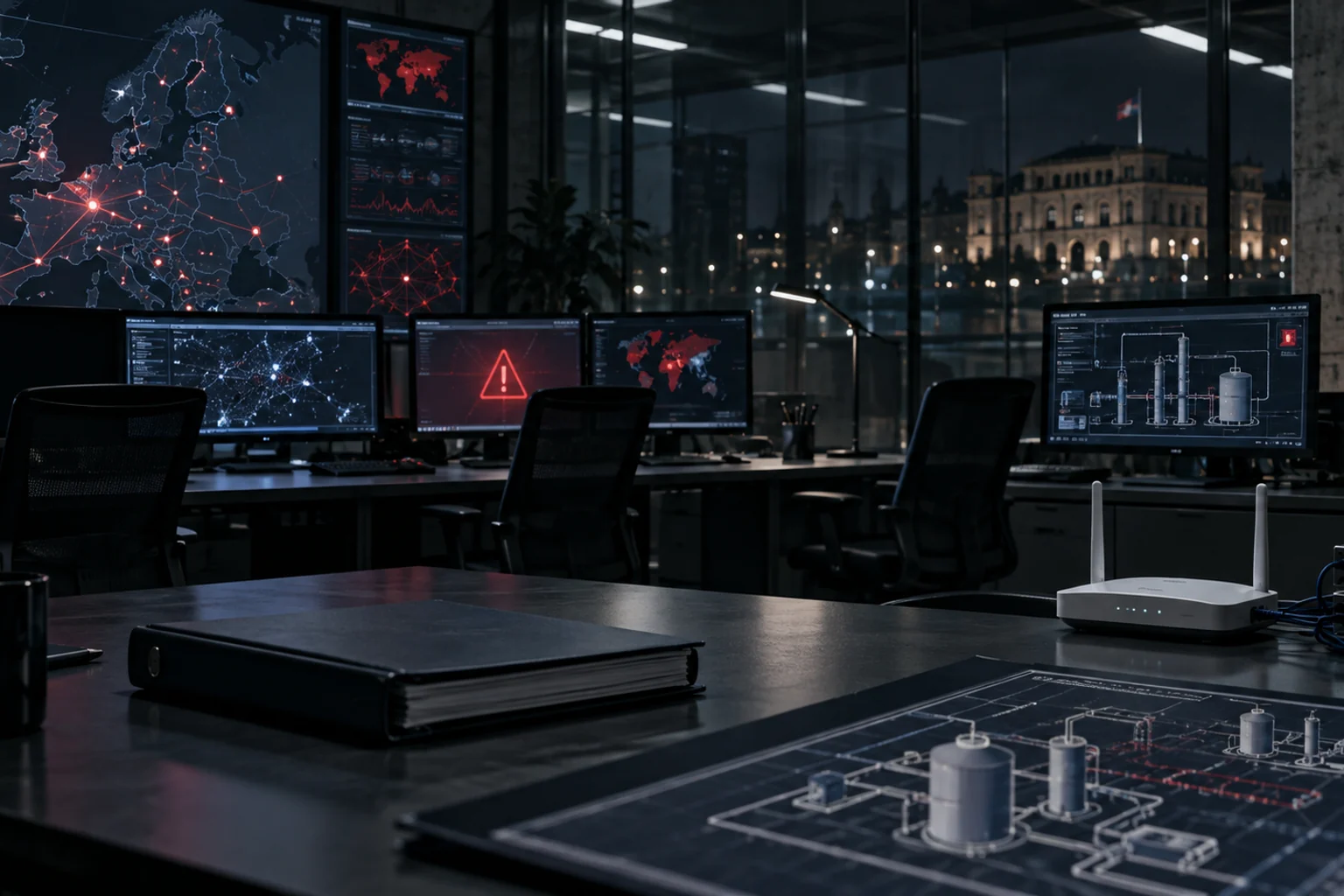
For CIOs, CISOs and boards, MHS is not a lab anecdote. It is a control plane for agents that get write access to machines that can ruin samples, pinch people or misalign a laser. Anthropic itself says Claude learns the physical world through text and images, and that spatial and physical reasoning still needs expert oversight. Genentech researchers had to teach Claude that foaming in samples was a physical failure, not a software bug.
MHS also does not yet work with hardware that lacks a programming interface. Anthropic says it is working with manufacturers to build drivers, and that the preview will be used to strengthen physical safety evaluations and a “physical safety roadmap” against misuse. When the standard is open-sourced, findings from the preview are supposed to ship as deployment guidance.
Three board questions should not wait for open source. First: who owns the safety limits in the reference file, and can an agent widen them? Second: when the agent writes a deterministic script that runs without reasoning, where are the kill-switch, logs and rollback — in the MCP layer, in PLC/SCADA, or nowhere? Third: model-agnostic means the same robot arm can be driven by Claude today and another model tomorrow. Identity, authority and audit trails have to sit on the equipment, not in the chat vendor.
Norwegian process, biotech, workshop and research-infrastructure operators should treat MHS as OT integration: isolated networks, least privilege, human-in-the-loop on irreversible steps, and a ban on a lab agent reaching the production network. A preview and a waitlist are not production readiness. They are the moment to demand that physical AI gets the same controls as a privileged industrial robot.
Sources and media
Primary source: Anthropic, “Previewing the Model Hardware Standard”, 27 August 2026: https://www.anthropic.com/news/model-hardware-standard-research-preview
Bloomberg, “Anthropic Tests New Way for Claude to Work With Robots and Scientific Lab Tools”, 27 August 2026: https://www.bloomberg.com/news/articles/2026-08-27/anthropic-tests-new-way-for-claude-to-work-with-robots-and-scientific-lab-tools
HHMI Janelia Research Campus, development partner for MHS: https://www.janelia.org/
Thumbnail: OpenAI Image 2 / hogby.ai