Gartner: Most enterprises will abandon AI copilots for outcome-driven automation by 2028
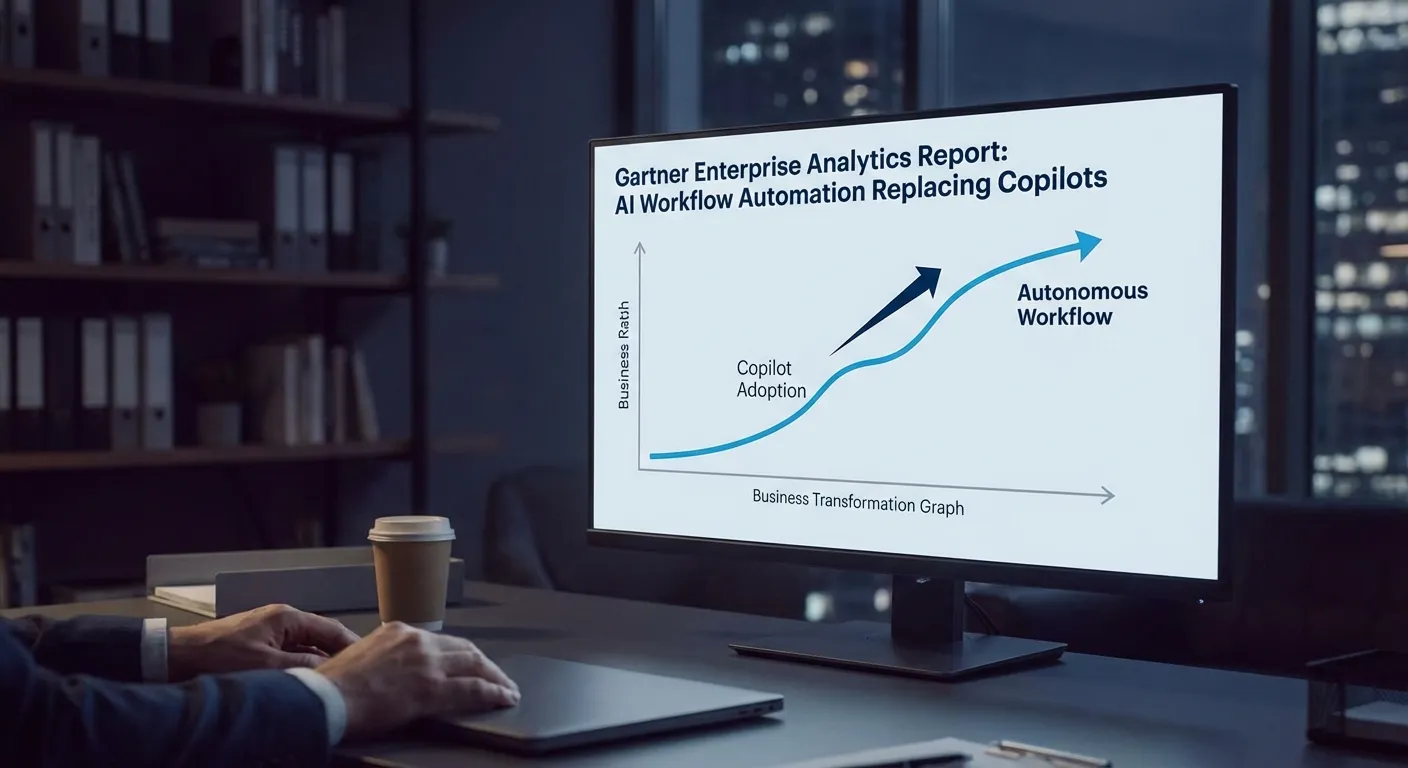

Gartner published a forecast on April 2, 2026, predicting that by 2028, more than half of all enterprises will move away from assistive AI such as copilots and chatbots, and instead favor platforms that commit to delivering measurable workflow results.
The shift represents a fundamental change in how organizations view AI value. Instead of AI that helps people do their jobs, enterprises want AI that executes outcomes directly, with humans in a supervisory rather than hands-on role.
According to Gartner, the driving forces are efficiency pressure and growing frustration with copilot-style AI that still requires significant human effort to produce value. Companies that have deployed AI assistants broadly are finding that the productivity gains are real but limited. Outcome-focused AI agents, by contrast, can eliminate entire workflow steps rather than just accelerating them.
This aligns with what Gartner calls the transition from augmentation to automation in enterprise AI strategy. In practical terms, this means AI that autonomously processes invoices, handles customer service cases end-to-end, or manages supply chain exceptions without requiring a human to review and approve each step.
The forecast carries implications for vendors. Microsoft Copilot strategy, based largely on assistive AI embedded in existing workflows, may face pressure to evolve toward more agentic, results-based models. OpenAI Codex agents and Anthropic Claude-based coding agents already point in this direction for technical work. The question is whether similar autonomous capability extends credibly to business process automation at scale.