War in the Gulf Threatens Global AI Infrastructure: Data Cables in the Crossfire
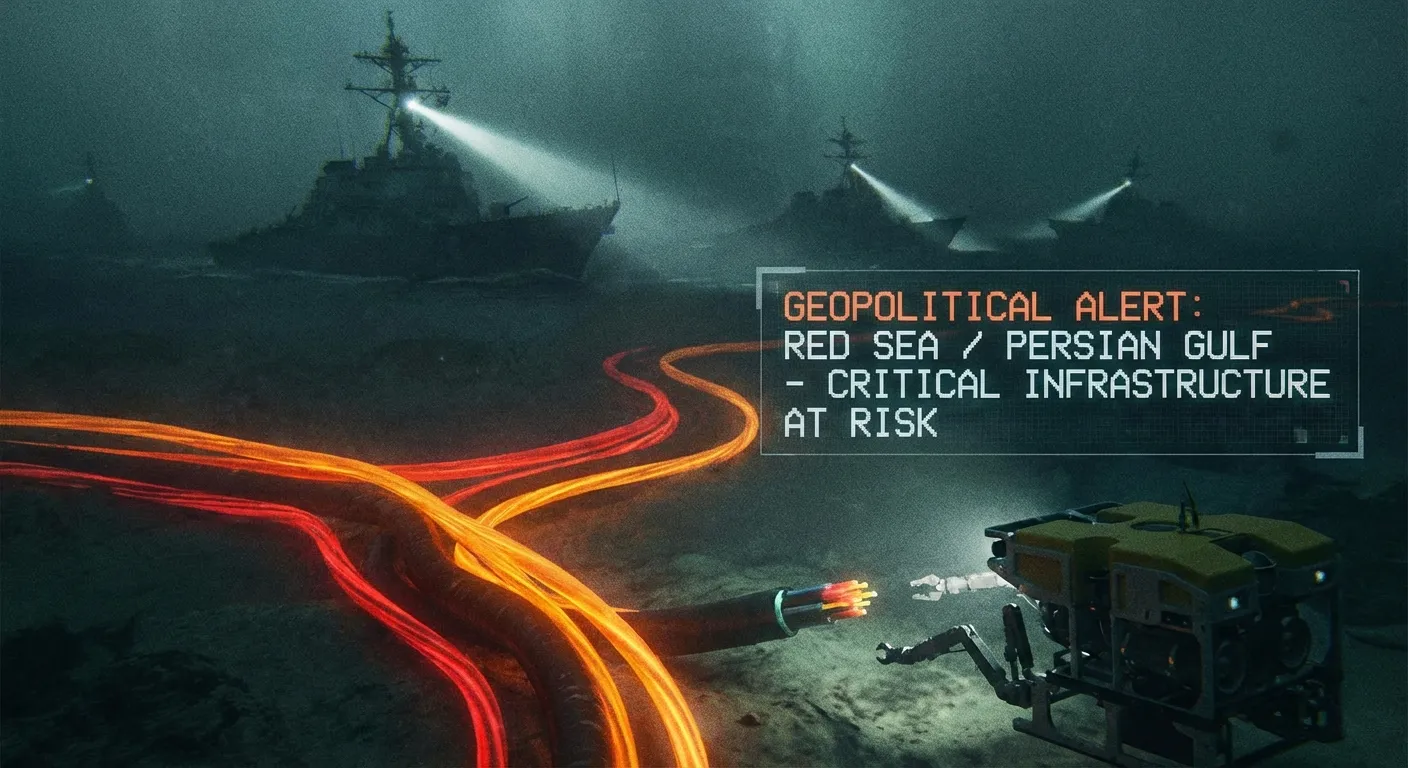

The billions Big Tech invested in data centers across the Persian Gulf and Red Sea region may now be trapped between two active war zones. A new analysis from Rest of World and The Intercept paints a grim picture of what could happen if undersea fiber cables are severed.
Iran declared the Strait of Hormuz closed on March 3, threatening to attack any vessel attempting passage. At least five tankers have been damaged and around 150 ships are stranded at the entrance. Meanwhile, Houthi militants in Yemen have announced they are resuming attacks in the Red Sea in solidarity with Iran, ending a ceasefire that had held since late 2025.
Both transit chokepoints are now effectively closed to commercial traffic simultaneously, something that has never happened before. Around 17 undersea cables run through the Red Sea, carrying the vast majority of data traffic between Europe, Asia, and Africa. Additional cables pass through the Strait of Hormuz, serving Iran, Iraq, Kuwait, Bahrain, and Qatar.
Amazon's data centers in the region were already struck in Iranian attacks on March 11, resulting in structural damage and power outages. Iranian state media subsequently listed data center facilities owned by Microsoft, Google, and Amazon as targets for future strikes.
For CIOs and technology leaders, this is a scenario that had to be planned for but that most hoped would never materialize: critical digital infrastructure has become a military target in a major geopolitical conflict.