Germany signs declaration of intent with NVIDIA on industrial AI
The Merz government and NVIDIA plan to develop physical AI models together, according to NVIDIA, which is also investing in four German startups. No amounts, timeline or funding are given.
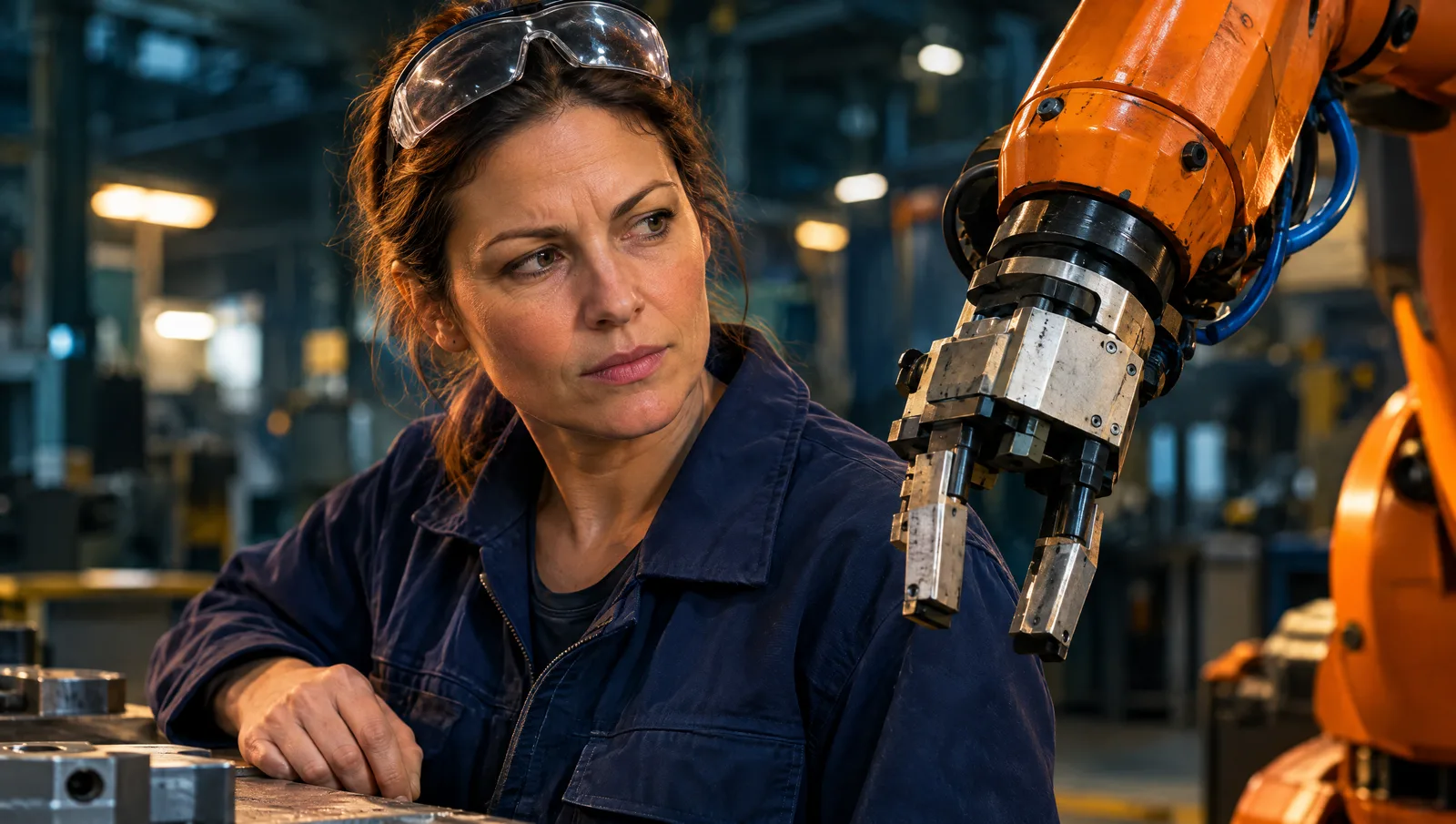

The German government has signed a joint declaration of intent with NVIDIA on industrial AI. NVIDIA said so in a blog post on Monday evening. Chancellor Friedrich Merz, the Federal Ministry for Economic Affairs and Energy and the Federal Ministry for Research, Technology and Space signed the declaration at the Invest in Germany Summit in Berlin. The same day, NVIDIA chief executive Jensen Huang announced planned investments in four German startups.
All information in this article comes from NVIDIA and its account of what Merz said. The declaration is a statement of intent, not a contract.
What Germany and NVIDIA agreed
According to NVIDIA, the declaration sets out that the parties will work on a joint initiative to advance cutting-edge AI models for physical AI, meaning AI that controls machines, robots and production. It formalises and expands NVIDIA's collaboration with the government and Germany's "Industry 4.0" platform, which brings together politics, industry, research and trade associations.
The government's stated goal is to "systematically bring industrial AI into widespread use and to establish a state-of-the-art industrial AI ecosystem in Europe", according to NVIDIA.
NVIDIA does not say how much money the initiative involves, who funds it, which models will be developed or when work will start. Nor does it say whether other vendors can take part.
Merz asks mid-sized companies to open their data
On stage at Kraftwerk in Berlin, Merz named the mid-sized family firms, the Mittelstand, as Germany's biggest advantage. "Please open your doors for AI to make use of your data," he said, according to NVIDIA. He said Germany aims to be one of the most advanced countries in the world at integrating AI into industry, including suppliers to the car industry.
Huang said the knowledge in German manufacturers "belongs to you" and that AI will augment it, not replace it. Merz said he wants to meet Huang at least once a year to review progress.
Four new investments and the Siemens factory in Erlangen
Huang announced planned investments in robotics company Agile Robots, health technology company Avelios Medical, audio model company Mirelo and satellite maker Reflex Aerospace. NVIDIA does not give the amounts. It describes the investments as part of a commitment of nearly 10 billion dollars to companies, universities and research institutions across Europe.
Earlier the same day, Siemens and NVIDIA showed AI solutions at the Siemens factory in Erlangen. There, agents propose production plans that a planner must approve before changes are applied. NVIDIA cites Siemens' own targets of up to 85 percent less engineering effort in virtual production ramp-up and up to 20 percent cost savings from agent-based planning. The figures have not been independently verified.
Huang gives the GTC Berlin keynote on Wednesday 21 October, 11:00 to 13:00 CEST.
What it means for business leaders
Assessment: The news changes no prices or licences today. It shows that Europe's largest industrial economy is tying its industrial AI push closely to a single American chip and platform vendor.
- Companies that supply the German car and machinery industries should watch which data and digital twin requirements come out of the initiative. No requirements have been stated so far.
- Merz is asking companies to share production data. Before such data goes into shared platforms, ownership, access and usage rights should be agreed in writing.
- Vendor dependence is a board-level question. Leaders planning AI in production should know which parts are tied to a single vendor.
Sources and media
- NVIDIA Blog: "Germany Wants to Lead the World in Industrial AI: How NVIDIA Will Help", published 19 October 2026 at 21:27 Oslo time (page metadata)
- NVIDIA Blog: GTC Berlin 2026 news, "Siemens and NVIDIA Put Industrial AI to Work in Erlangen", 19 October 2026
- Sources were checked on 19 October 2026 at 21:44 Oslo time.
- Illustration: AI-generated with Grok Bot / hogby.ai